Overview
Through The College of Idaho’s graduate education programs, students can pursue their passion for teaching and make a difference in the lives of students. Through its Education Department, the College offers the following graduate programs:
- Master of Education: Educational Leadership
- Master of Arts in Teaching (MAT)
- Fifth-Year Licensure Program (which focuses on fulfilling the requirements for licensure under the Idaho Core Standards for Initial Certification for students who have majored/minored in education during their undergraduate program)
Department Mission and Vision
Department Core Values
- All individuals are inherently valuable and should be treated with respect.
- All individuals can learn.
- Learning is enhanced when informed by a combination of research and best practice.
- Educators should be people of integrity.
- Regarding teaching and learning, the whole is bigger than the sum of the parts.
An Educative Learning Community
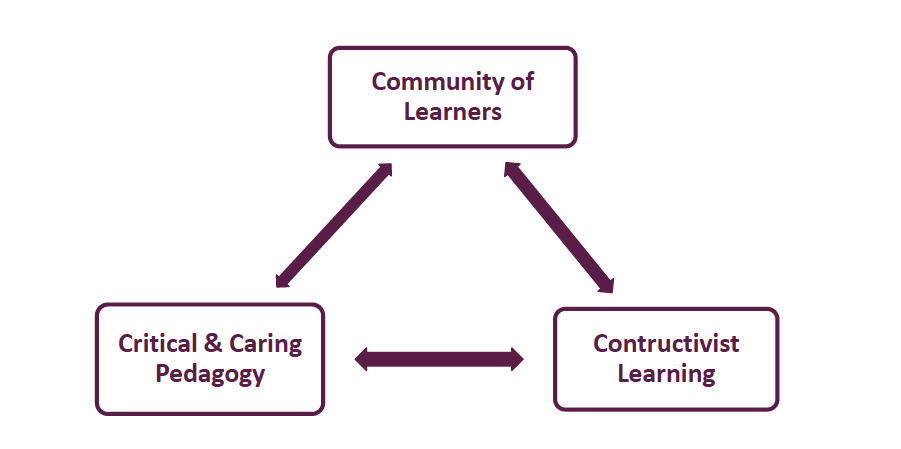
The Education Department at The College of Idaho strives to be an educative learning community. The conceptual framework of our programs is one based on John Dewey’s understanding of educative experiences that encourage personal and community growth (Dewey & Archambault, 1964). It is a community where students are provided with a reflective, caring environment so that the process of becoming a teacher can be explored. It is a community where students are offered a vision of schooling that promotes and helps create a more just and democratic society.
“The difference between mere circumstance and lived experiences is our capacity to bestow experience with meaning, be reflective, and take action.”
-John Dewey
- Community of Learners: An educative learning community counters the image of the teacher as a “technician” with one of the teacher as an active participant in issues that affect the larger educational community (Apple & Beane, 2007). Rather than avoid a discussion of values, this perspective advocates the necessity of such discussions, because teaching is, at its core, a value-laden enterprise (Goodland, Soder, & Sirotnik, 1990). The program, based upon students who learn and grow together, encourages ongoing conversations about meaningful issues central to a liberal arts education.
- Critical and Caring Pedagogy: An educative learning community takes the position that a hopeful, democratic future depends upon educators committed to emancipatory education (Giroux, 1997). It reflects Landon Beyers’ description of an emancipatory curriculum in teacher education as one that is designed to emphasize the following: equal access to knowledge, images of human equality, development of a “critical consciousness,” self-reflectivity, creativity, cultural acceptance, moral responsibility, democratic empowerment, and a pedagogy of caring (Beyer & Apple, 1998). It affirms Nel Noddings’ belief that for schools to be true centers of learning, they must embrace caring in all its forms—care for self, for intimate others, for associates and acquaintances, for distant others, for nonhuman animals, for plants and the physical environment, for the human-made world of objects and instruments, and for ideas (Noddings, 2005).
- Constructivist Learning: An educative learning community takes a constructivist perspective toward classroom practice in which learning is seen as active, purposeful, and generated from within. This perspective, rooted in Piagetian principles of development and drawing on Vygotsky (Tryphon & Voneche, 1996), extends the notion of the construction of knowledge from one that is primarily an individualized and internal process to one that more comprehensively encompasses social foundations of thinking (Bruner, 1986). In this view, knowledge is not only embedded in socio-historical and socio-cultural elements, but is actually generated through shared interactions and individual internalization (Wertsch, 1991).
Registration and Enrollment
Upon confirmation of admission, the College will enroll the student in the courses for the graduate program for the 2026-2027 academic year. To complete enrollment, the student must be registered full-time for the semester/term and must either be paid in full for the entire program or on a payment plan (see Payment Options) on or before the first day of class.
Full-time enrollment for our MAT program is six (6) credits in summer one; twelve (12) credits each in fall and spring; and eight (8) credits in the second summer. To remain eligible for federal loans, students must be enrolled in at least three (3) credits, six (6) credits, six (6 credits), and four (4) credits respectively.
Full-time enrollment for our MEd program is six (6) credits per semester/term. To remain eligible for federal loans, students must be enrolled in at least three (3) credit hours each semester.
Failure to make satisfactory payment arrangements by the stated deadline will result in expulsion from classes and charges calculated according to the refund rate for withdrawal (see Institutional Refund Policy).
Graduate Education Academic Calendar
2026-27 Academic Calendar
|
Summer Term 2026
|
| June |
01 |
M
|
Instruction Begins for MAT and MEd |
| |
05 |
F |
Last Day to Drop Summer Courses |
|
19 |
F |
Juneteenth — College Offices Closed |
| |
22 |
M |
Last Day to Drop/Withdraw with a Refund: Grade of W will still apply |
June-July
|
29-03 |
M-F |
College Offices Closed |
July
|
10 |
F |
Last Day to Withdraw from Summer Courses |
| |
24 |
F |
Last Day of MAT and MEd Courses |
| |
29 |
W |
Final Grades Due — Noon |
| |
|
|
|
Fall Semester 2026
|
| August |
26 |
W |
Instruction Begins |
September
|
07 |
M |
Labor Day — No Classes |
| |
09 |
W |
Last Day to Drop Fall Courses |
| |
|
|
Census Date |
| |
16 |
W |
Last Day to Drop/Withdraw with a Refund: Grade of W will still apply |
October
|
15-16 |
Th-F |
Fall Break — No Classes |
| |
19 |
M |
Instruction Resumes |
|
22 |
Th |
Midterm Grades Due — Noon |
November
|
19 |
Th |
Last Day to Withdraw from Fall Courses |
|
23-27 |
M-F |
Thanksgiving Break — No Classes |
| |
26-27 |
Th-F |
Thanksgiving Holiday — College Offices Closed |
| December |
03 |
Th |
Last Day of Classes |
|
07-10 |
M-Th |
Final Examinations |
| |
12 |
Sa |
Fall Graduation Celebration |
|
16 |
W |
Final Grades Due — Noon |
|
24-31 |
Th-Th |
Holiday Break — College Offices Closed |
| January |
01 |
F |
New Year's Holiday — College Offices Closed |
Spring Semester 2027
|
| February |
02 |
T |
Instruction Begins |
|
16 |
M |
Last Day to Drop Spring Courses |
| |
|
|
Census Date |
| |
22 |
M |
Last Day to Drop/Withdraw with a Refund: Grade of W will still apply |
March
|
22-26 |
M-F |
Spring Break — No Classes |
|
24 |
W |
Midterm Grades Due — Noon |
| |
29 |
M |
Instruction Resumes |
| April |
22 |
Th |
Last Day to Withdraw from Spring Courses |
| May |
10 |
M |
Last Day of Classes |
|
11-14 |
T-F |
Final Examinations |
| |
15 |
Sat |
Commencement Ceremony (MAT program) |
|
19 |
W |
Final Grades Due — Noon |
Tuition and Fees
The tuition and fees for the Master of Education, endorsement-only programs and Master of Arts in Teaching are due on or before the first day of classes for each semester/term. The tuition and fees for the Fifth-Year Internship are due on or before the first day of classes for the fall term. Delinquent tuition penalties accrue at 1.5 percent per month, which is 18 percent per year. For more information, see Financial Arrangements.
Program
|
Tuition
|
Graduate Program Fee
|
| Master of Education |
$525 per credit |
$60 per term |
| Master of Arts in Teaching (summer) |
$690 per credit |
$70 per year |
| MAT and Fifth-Year Internship |
$13,710 |
$70 per year |
For additional information about cost of attendance for the education programs, see Cost of Attendance.
Master of Education (MEd)
The College of Idaho’s Master of Education (MEd) in Educational Leadership degree is a hybrid, district-embedded program that empowers already-certified teachers to lead with confidence and equips them with skills to pursue a career as a principal.
Admission Requirements
The Master of Education in Education Leadership degree is a district-embedded program, and therefore to qualify for admission, applicants must be recommended by their school district to enroll in this program. Additionally, applicants must complete the Master of Education Application, which includes:
- Requirements to upload the following:
- Transcripts from all institutions of higher education attended;
- A 500- to 1,000-word personal statement focused on the reason for pursuing this graduate degree and how it will advance the applicant’s future goals; and
- Evidence of a bachelor’s degree with a minimum cumulative GPA of 3.0.
Application Deadline
The College of Idaho’s Master of Education (MEd) program begins in the summer term and its application deadline is May 1, 2026.
Year 1
|
Term Dates
|
| Summer 2026 |
06/01/26-07/24/26 |
| Fall 2026 |
08/26/26-12/10/26 |
| Spring 2027 |
02/02/27-05/14/27 |
Year 2
|
Term Dates
|
| Summer 2027 |
06/01/27-07/23/27 |
| Fall 2027 |
08/25/27-12/09/27 |
Selection of Applicants
Applicants for the next start date are reviewed on an ongoing basis by the Graduate Admission Committee. The committee reserves the right to accept, reject, or defer an application. Applicants receiving a letter of acceptance are granted a specific time period to notify the program of their intention to enroll.
Graduation Requirements
To earn an MEd degree at The College of Idaho, a candidate must complete all prescribed courses and pass all courses with a grade of B or better.
Grading
The MEd program adheres to the College grading scale. Students who wish to file an academic appeal concerning a course grade should review the Grade Change Policy.
Master of Arts in Teaching (MAT)
The Master of Arts in Teaching (MAT) program is offered as an extension of the Fifth-Year Licensure Program (or internship year) and consists of 35-36 credits.
Enrollment in the program is limited to 15 students. Preference will be given to students who have been enrolled in The College of Idaho's undergraduate education program. Applications will be accepted for review from:
- College of Idaho graduates who have completed one of the following: the Interdisciplinary Studies for Elementary Precertification major, the Elementary Teaching major, a secondary teaching major in a given content area, or the Education minor.
- Candidates who have a bachelor’s degree from an accredited institution in elementary education or with appropriate coursework in two areas of endorsement, and the Education minor.
Admission Requirements
The Master of Arts in Teaching program is designed as an extension of the Fifth-Year Licensure program (or internship year). Persons eligible to matriculate in this program must complete the Master of Arts in Teaching Application, which includes:
- Evidence supporting:
- Completion of a bachelor’s degree from an accredited institution;
- Completion of an education major (elementary) or education minor (secondary) with additional requirements for elementary or secondary certification;
- A 3.0 or higher GPA or better in the candidate’s undergraduate degree; and
- Requirement to upload the following:
- Transcript(s) from all institutions of higher education attended;
- An essay discussing the conceptual framework of the College’s Education Department and how you see it influencing you as a teacher;
- Portfolio with a score of 88/132 or higher; and
- The email addresses of three individuals who will complete a recommendation form (sent directly by the College to your references) and who must include the following: (i) a K-12 teacher with whom the candidate has worked; (ii) a faculty member in the candidate's content area; and (iii) a person of the candidate's choice.
Application Deadlines
The College of Idaho’s Master of Arts in Teaching program requires students currently enrolled in the College’s undergraduate program to complete the admission process by March 15, 2026, and all other candidates to complete the admission process by April 1, 2026.
Selection of Applicants
Applicants for the next start date are reviewed on an ongoing basis by the Education Admission Committee. The committee reserves the right to accept, reject, or defer an application. Applicants receiving a letter of acceptance are granted a specific time period to notify the program of their intention to enroll.
Grading
The MAT program adheres to the College grading scale. Students who wish to file an academic appeal concerning a course grade should review the Grade Change Policy.
Graduation Requirements
To earn an MAT degree at The College of Idaho, a candidate must complete all prescribed courses and pass all courses with a grade of B or better.
Graduates of the program are required to complete a thesis approved by a thesis committee and the department chair. Candidates must be continually enrolled while completing the program. If all coursework has been completed except the thesis, the candidate must enroll in Thesis Completion (EDUC 6781) each term until the thesis has been accepted by the thesis committee and the department chair. The responsibility rests with candidates to see that their program of study satisfies all of the requirements.
Fifth-Year Licensure
The College of Idaho’s post-baccalaureate certification program requires that candidates have completed a bachelor’s degree with either the Education minor or the Interdisciplinary Studies for Elementary Precertification major. Candidates planning to teach at the secondary level must have a major that meets the requirements of one of the institution’s state-approved first teaching field programs and, in most cases, the requirements for an additional endorsement area as a second teaching field. Candidates must apply for admission to the internship year and meet requirements in areas such as cumulative GPA, dispositions, and the Praxis exam. Please see the Education Department Handbook for more information.
Application Deadlines
The College of Idaho’s Fifth-Year Licensure Program requires students currently enrolled in the College’s undergraduate program to complete the admission process by March 15, and all other candidates to complete the admission process by April 1, 2026.
Admission Requirements
Persons eligible to matriculate in this program must complete the Fifth-Year Licensure Application, which requires the following for candidate seeking to enroll in:
Elementary Certification
-
Evidence supporting:
-
Completion of a bachelor's degree in Interdisciplinary Studies for Elementary Precertification or the equivalent coursework;
-
Completion of the checkpoint requirements as outlined in the Education Department Handbook (see Advising); and
-
A cumulative GPA of 2.75 or higher in their undergraduate program (or 3.0 or higher if the candidate desires to pursue the MAT degree).
-
Requirement to upload the following:
-
Transcript(s) for all institutions of higher education attended;
-
Proof of fingerprinting and acceptable background check on file with the Idaho State Department of Education; and
-
A recommendation from the faculty of the College's Education Department.
Secondary Certification
- Evidence supporting:
- Completion of a bachelor’s degree and the Education minor with additional requirements for secondary certification;
- Required coursework completed for second teaching field (recommended);
- Completion of the checkpoint requirements as outlined in the Education Department Handbook (see Advising); and
- A cumulative GPA of 2.75 or higher GPA in their undergraduate program (or 3.0 or higher if the candidate desires to pursue the MAT degree).
- Requirement to upload the following:
- Transcript(s) from all institutions of higher education attended;
- Proof of fingerprinting and acceptable background check on file with the Idaho State Department of Education; and
- A recommendation from the faculty of The College’s Education Department.
Selection of Applicants
Applicants for the next start date are reviewed on an ongoing basis by the Education Admission Committee. The committee reserves the right to accept, reject, or defer an application. Applicants receiving a letter of acceptance are granted a specific time period to notify the program of their intention to enroll.
Advising
Appeal Procedure
Any candidate who has been denied admission to the teacher education program, recommendation for admission to the MAT program, admission to internship, recommendation for admission to the MEd program, or recommendation for certification, and who believes that this action was not justified, may appeal the decision through the procedure outlined below. Students wishing to initiate such action must do so in writing within three weeks of being notified of the decision they wish to appeal.
The appeal procedure is as follows:
-
A written statement requesting reconsideration of action shall be presented to the chair of the Education Department. The statement must include reasons for the request. The student shall meet with the chair of the Education Department to determine if a satisfactory agreement can be achieved at that level. The chair shall respond to the student, in writing, concerning the outcome of that meeting within five working days of the meeting.
-
If the situation is not resolved to the satisfaction of the student in step one, the student shall be entitled to appear, in person, before a hearing committee composed of the full-time College of Idaho faculty members teaching in the Education Department, without the department chair present. The student must notify the department of their desire to move the appeal process to level two within one week of receiving notification of the decision at level one. A written document, including the nature of the request, the student’s description of the situation in question and their rationale for the request, shall be submitted to each department faculty member at least two days prior to the meeting. An Education Department faculty member shall provide the student with written notification of the faculty’s response to the student’s request within five working days of the meeting.
-
If the situation is not resolved to the satisfaction of the student, they may take the request to a hearing committee composed of the Dean of the Undergraduate Faculty, the Education Department chair, and a K-12 school administrator who currently serves on the Teacher Education Advisory Committee. The student must notify the department of their desire to move the appeal process to level three within one week of receiving notification of the decision at level two. The student shall provide each member of the committee with a written description of the issue in question and the rationale for their request at least two days prior to the meeting. The student shall receive written notification of the results of the hearing within five working days of the meeting.
The decision of the level three hearing committee shall be considered final.
Certification
The advising process in the teacher education program begins at the undergraduate level. Each candidate in the elementary education program is assigned an advisor from the Education Department. Candidates preparing to be secondary teachers have an advisor from the area of their major and, upon acceptance into the program, a co-advisor from the Education Department. Though primary responsibility for advising rests with the candidate, the education advisor works with the candidate in conjunction with their major advisor in planning the sequence of courses that leads to graduation and that meet State Department of Education requirements for certification with endorsements in a first and second teaching field. The advisor monitors the candidate’s progress through the portfolio process, state testing requirements, and the coursework for the minor. During the internship year, the Education Department faculty guides interns through the digital portfolio process and assists candidates in completing a placement file and preparing the paperwork for state licensure.
To assure that candidates are progressing successfully through the teacher education program, the department has established five checkpoints (beginning in the undergraduate portion of the program) at which progress is reviewed. For information on the specific timing and requirements of each checkpoint, please consult the Education Department Handbook.
Completion Requirements
To fulfill the requirements for licensure through The College of Idaho’s program and meet the Idaho Core Standards for Initial Certification, a candidate’s graduate coursework must be completed with a grade of B or better.
Grading
The licensure program adheres to the College grading scale. Students who wish to file an academic appeal concerning a course grade should review the
Grade Change Policy.